Education News
Joined by 14 other universities, we have built an academic community to shape a new vision for international education.
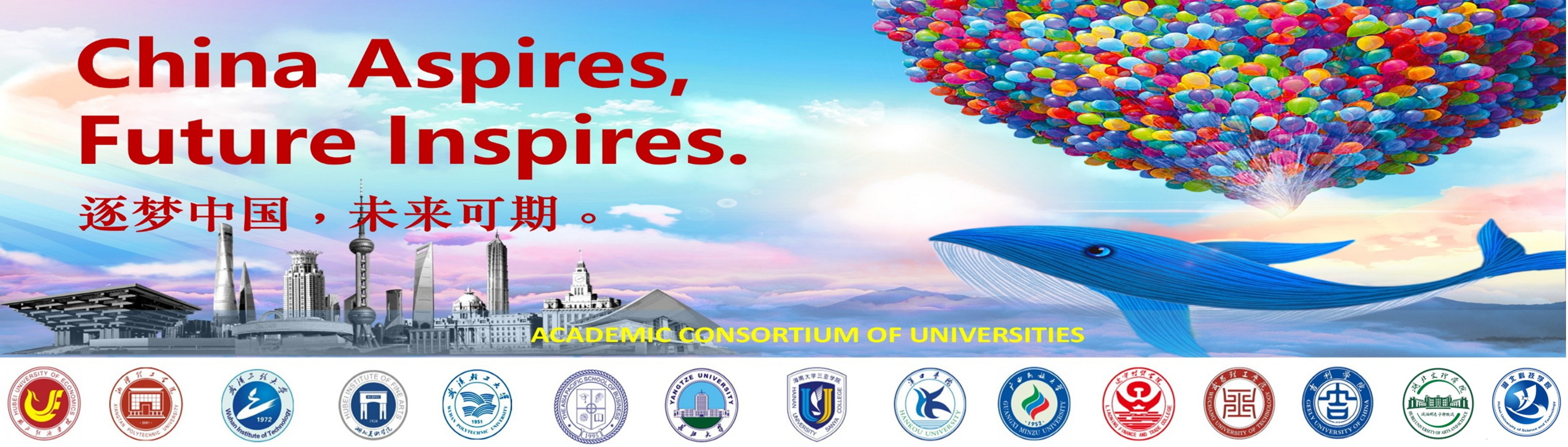
Our university, together with fourteen other institutions of higher learning,
has formed an academic community to jointly forge a new blueprint for the development of international education.
Recently, the Asia-Pacific Business School has officially joined hands with fourteen Chinese universities to establish an academic community. The launch of this community marks the opening of a new chapter for international education cooperation, joint school-running and other fields, and will inject strong momentum into the sharing of educational resources as well as academic exchanges and collaboration.
The community comprises a diverse lineup of member institutions, covering higher education establishments of various types from different regions. The fourteen universities, each boasting distinctive strengths and characteristics, include Yangtze University, Wuhan Polytechnic University, China Three Gorges University, Guangxi Minzu University, Sanya University, Liaoning University of Finance and Trade, Hubei Institute of Fine Arts, Chengdu Geely University, Hubei University of Economics, Hubei University of Science and Technology, Wuchang University of Technology, Hankou University, Hubei University of Arts and Science, and Xiangtan Institute of Technology. Yangtze University enjoys outstanding strength in disciplines such as petroleum engineering and agronomy. Wuhan Polytechnic University excels in chemical engineering, materials science and other majors. The Hubei Institute of Fine Arts stands out prominently in art education. With profound academic heritage and remarkable achievements across diverse disciplines, these institutions will tear down inter-university barriers and realize complementary strengths through the establishment of the academic community. By sharing resources and exchanging experience, they will jointly explore new paths for educational development and elevate the overall quality of higher education.
It is learned that the academic community will carry out in-depth cooperation in a number of key areas with clear implementation plans and objectives for each initiative. In terms of expanding international education, the community will integrate the international exchange channels and resources of all member parties, and actively introduce advanced international educational philosophies and high-quality courses. It plans to build stable cooperative ties with numerous renowned overseas universities, offering students diverse opportunities including short-term exchange programs and overseas further study. This enables students to engage with different cultures and educational models during their studies, broadening their global vision and enriching their learning experience.
Strengthening joint school-running is another core priority. The community will organize core teachers from relevant majors of all member universities to conduct joint discussions. In light of market demands and disciplinary development trends, member institutions will jointly launch a number of featured majors integrating their respective advantages. For talent cultivation, joint training models such as "2+2", "3+1" and "2+1+1" will be adopted. Students will study on different campuses to fully leverage the teaching resources of all participating universities. This approach helps improve talent training quality to meet the society’s demand for versatile, high-caliber professionals.
The promotion of Chinese language teaching is also a key task of the community. Drawing on the experience and resources of member universities in Chinese language education, the community will compile more targeted and practical Chinese language textbooks, and organize online and offline training sessions for Chinese language teaching. A variety of activities including Chinese corners and Chinese Culture Experience Camps will be held for both domestic and international students. These efforts facilitate the communication and dissemination of Chinese language and culture, helping more people understand and embrace the Chinese language and traditional Chinese culture.
The faculty exchange program will create more opportunities for teachers to communicate and learn. The community will formulate a detailed teacher exchange plan, under which teachers will be regularly dispatched to other member institutions to deliver lectures and participate in research projects. Through such exchanges, teachers can learn advanced teaching methods and research ideas from peer institutions, which boosts their professional development and lifts the overall standard of teaching.
In the field of academic exchanges, the community will host a major annual academic conference as well as multiple thematic forums, building a platform for academic communication between teachers and students. Centering on cutting-edge disciplinary research and prevailing social issues, these events encourage interdisciplinary research and innovation, promote the integration of different disciplines, and inspire the research enthusiasm and creative thinking of teachers and students.
The introduction of a credit recognition system will further break down inter-university barriers. The community will formulate unified credit evaluation standards to facilitate students’ course selection and academic exchanges across institutions. Credits earned by students at any member university will be recognized by all other partners, ensuring effective recognition of academic outcomes and enabling students to study in a more flexible and independent manner.
In addition, the community will cooperate extensively on the HSK (Hanyu Shuiping Kaoshi, Chinese Proficiency Test). It will jointly build standardized HSK test centers, unify examination organization and management procedures, and provide professional training for test administrators. These measures deliver more convenient and efficient registration and examination services for overseas candidates. Meanwhile, tailored tutoring materials for the HSK will be compiled and pre-examination training courses launched to help candidates prepare well, advancing the standardized development of international Chinese language education.
Dr. Yiyan Jianyin, Rotating Chairman of the Board of Governors of the Asia-Pacific Business School, stated that the establishment of the academic community with the fourteen universities is an important initiative to respond to China’s national education development strategies and advance the internationalization of higher education. Through powerful alliance and effective integration of premium educational resources, the community will form strong synergy in higher education, enhance the competitiveness and influence of its member institutions in the global higher education arena, and contribute to the global development of Chinese higher education.
All member universities have expressed great expectations for this partnership. They pledged to actively participate in all initiatives of the academic community, abide by its articles of association and regulations, share resources, collaborate closely and forge ahead together to contribute to the development of education in China.
Building dreams for China, a promising future lies ahead. The alliance between the Asia-Pacific Business School and the fourteen universities undoubtedly injects new vitality and hope into the development of Chinese higher education. With the joint efforts of all parties, this academic community will surely write a remarkable chapter in international education cooperation and development.
Please contact us if you have any comments or suggestions.